
New Orleans Bohemia
The French Quarter was in decline when, in 1918, two residents – Lyle Saxon, a journalist, and Alberta Kinsey, an artist – had a vision.
Saxon and Kinsey believed that if they could attract artists to the Quarter, it would draw national attention to the beautiful historic architecture that was deteriorating. They hoped that restoration and preservation would follow.
They were right.
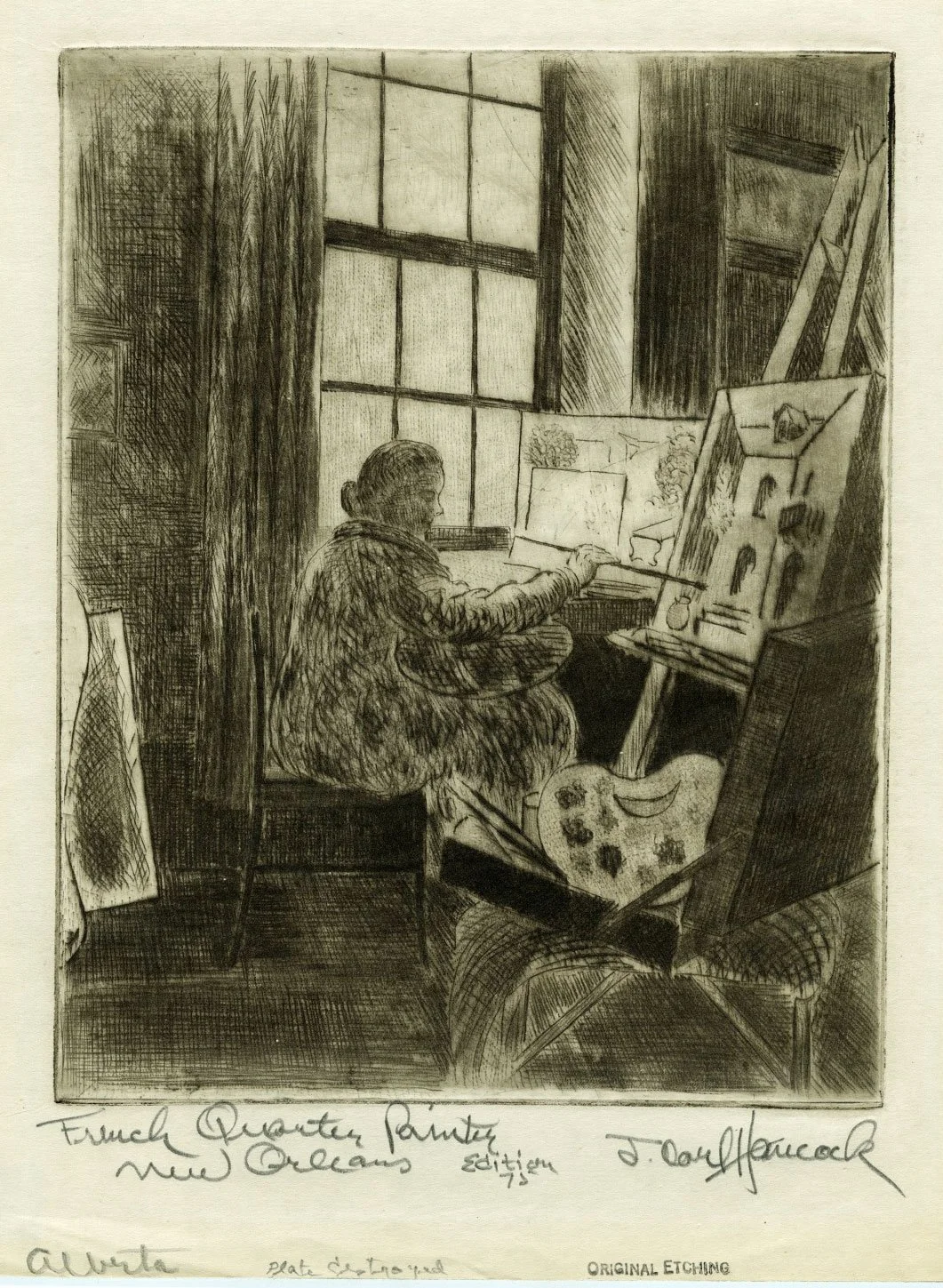
Etching of Alberta Kinsey painting in her studio, by James Carl Hancock, 1930s. Historic New Orleans Collection, partial gift of Dr. James W. Nelson
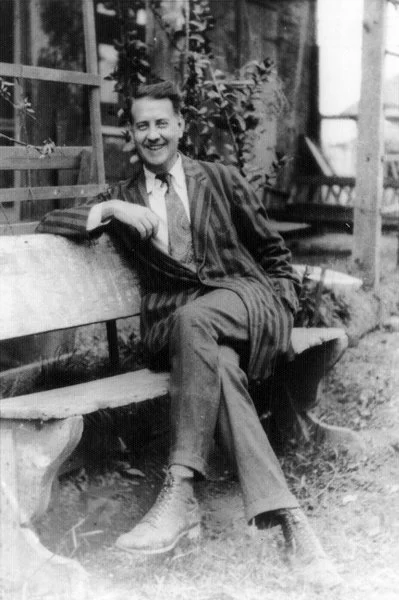
Lyle Saxon in front of his cabin at Melrose Plantation, an arts colony in Natchitoches, Louisiana, 1925. Louisiana State Library
Their dream materialized and a strong art movement commenced in the Quarter during the 1920s. Artist Daniel Whitney, the protagonist in Painting Catherine, was an active participant.
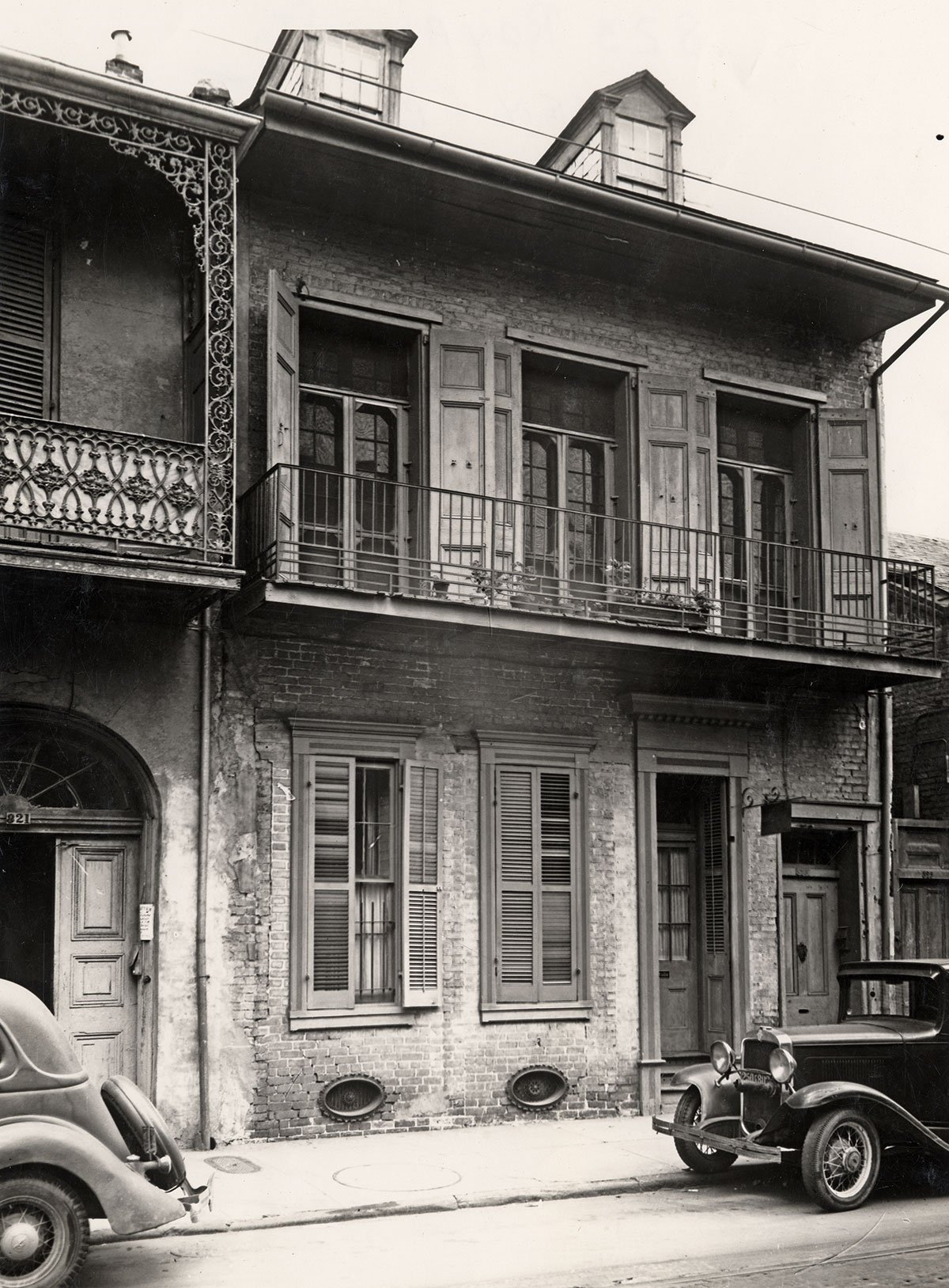
823 Royal Street in 1939, the home of artist Alberta Kinsey. Courtesy of the Louisiana State Museum, Louisiana Works Progress Administration (WPA), T0010.1989.057
Sherwood Anderson & Other Famous Creoles
One of the most intriguing and lasting records of the 1920s French Quarter was a book written by a young William Faulkner and his roommate, architect William Spratling, who included cartoonish sketches.
The book, consisting of 43 profiles of their artists and friends, was published in 1926 – as a prank of sorts. However, the humor fell flat and created a lifelong rift between Sherwood Anderson and William Faulkner.
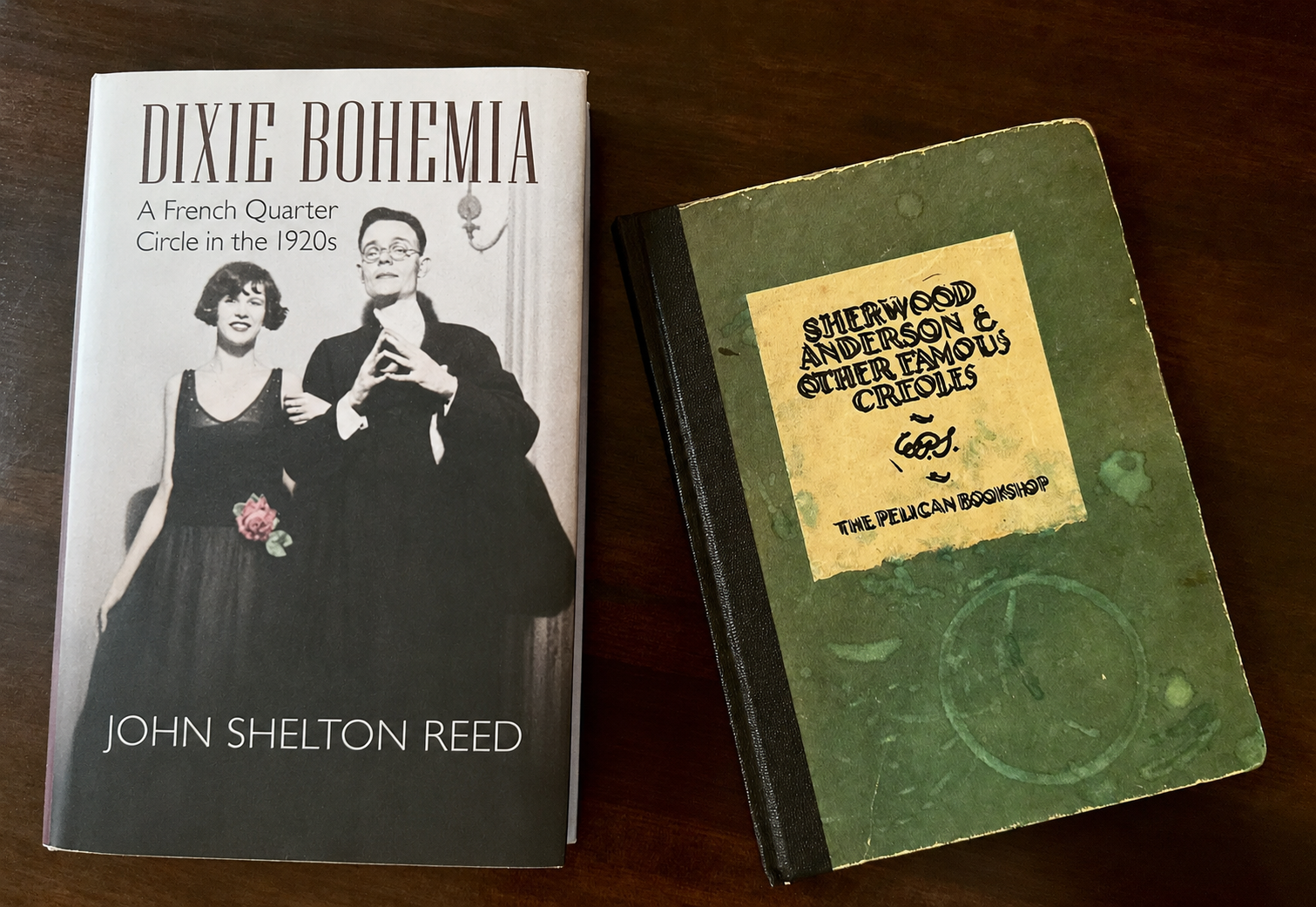
A rare original copy of Sherwood Anderson & Other Famous Creoles, by William Faulkner and William Spratling in 1926. Only a few hundred copies were printed originally, but there’s a wonderful reprint available. Click here to purchase the reprint from your favorite local bookstore.
Dixie Bohemia by John Shelton Reed, profiles all 43 of the artists and friends who were included in the Faulkner and Spratling’s original book. Click here to purchase from your favorite local bookstore.